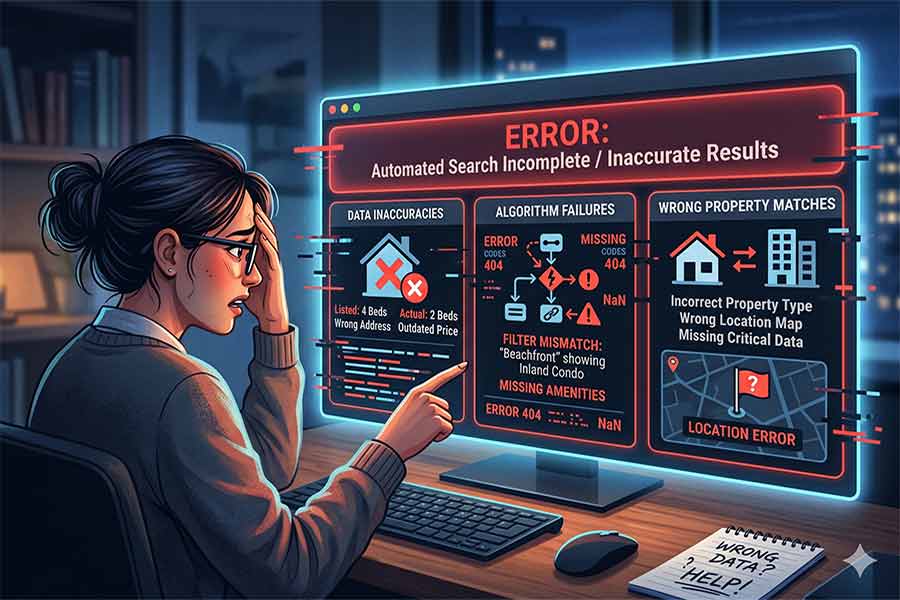
In today’s fast-moving real estate industry, automated property searches have become essential tools for title companies, attorneys, lenders, investors, and real estate professionals. These technologies help streamline research, reduce manual effort, and speed up transactions. However, while automation delivers efficiency, it does not guarantee complete accuracy.
Many professionals assume that automated property searches provide comprehensive results every time. Unfortunately, this assumption can lead to costly mistakes, missed records, delayed closings, and legal complications.
As discussed in our cornerstone guide, Real Estate Data Accuracy: Why Incomplete Searches Lead to Costly Errors, incomplete property data can have serious financial and legal consequences. Understanding the common pitfalls of automated property searches is the first step toward improving search accuracy and reducing risk.
Why Automated Property Searches Are Valuable
Automated property searches allow professionals to access large volumes of property information quickly. Instead of manually reviewing multiple databases and county records, search systems can compile data from numerous sources in minutes.
Benefits include:
- Faster turnaround times
- Increased operational efficiency
- Reduced manual research effort
- Improved scalability for large search volumes
- Better workflow management
However, the effectiveness of automated property searches depends heavily on data quality, search parameters, and verification processes.
Common Errors in Automated Property Searches
Even advanced technology can produce incomplete or inaccurate results when critical factors are overlooked.
1. Missing Variations in Property Owner Names
One of the most frequent problems in automated property searches involves owner name variations.
For example, a property owner may appear in public records as:
- John A. Smith
- John Smith
- J. A. Smith
- Jonathan Smith
If search algorithms fail to account for these variations, important records may be excluded from the results.
This issue is particularly common in New Jersey counties where records may have been entered differently over many years or across multiple jurisdictions.
How to Avoid It:
- Use expanded search logic
- Include aliases and name variations
- Verify results through supplemental searches
- Review historical ownership records
2. Incomplete County Record Coverage
Many automated property searches rely on databases that may not include every available public record source.
New Jersey contains 21 counties, each maintaining records through different systems and processes. Data availability and update schedules can vary significantly from county to county.
When a search platform does not capture all relevant jurisdictions, critical information may be missed.
Potentially overlooked records include:
- Liens
- Judgments
- Easements
- Tax issues
- Ownership transfers
How to Avoid It:
- Confirm geographic coverage before relying on results
- Use providers with extensive county-level access
- Perform secondary verification for high-value transactions
Data Timing and Update Delays
A search can only be as accurate as the data it contains.
3. Reliance on Outdated Records
Public records are constantly changing. New liens, judgments, releases, and ownership changes occur daily.
Some automated property searches may rely on data feeds that are not updated in real time. Even a short delay can create significant problems during active transactions.
In competitive New Jersey real estate markets, outdated information can affect:
- Closing timelines
- Lending decisions
- Title clearance
- Investment evaluations
How to Avoid It:
- Verify record update frequencies
- Check for recent filings before closing
- Use providers known for timely data integration
4. Failure to Capture Newly Recorded Documents
Recently recorded documents may not immediately appear in search databases.
A judgment filed yesterday or a newly recorded deed could remain unavailable until system updates occur.
This creates a dangerous gap between public record activity and search results.
How to Avoid It:
- Conduct final verification searches before closing
- Review county recording offices when necessary
- Establish quality-control procedures for critical transactions
Search Logic Errors and Data Interpretation Issues
Not all errors originate from missing data. Some result from how systems interpret information.
5. Parcel and Address Matching Problems
Property records may contain:
- Address changes
- Multiple parcel numbers
- Subdivision updates
- Lot consolidations
Automated property searches sometimes struggle to connect these related records correctly.
A search based solely on a street address may fail to identify associated parcels or historical records.
How to Avoid It:
- Search by multiple identifiers
- Include parcel numbers when available
- Cross-reference ownership and legal descriptions
6. Ignoring Historical Property Data
Current ownership information tells only part of the story.
Historical records often reveal:
- Previous liens
- Ownership disputes
- Unreleased encumbrances
- Chain-of-title issues
Some automated property searches focus primarily on current records and may not adequately surface historical information.
How to Avoid It:
- Review ownership history
- Analyze chain-of-title records
- Conduct deeper searches for complex transactions
Human Oversight Still Matters
7. Overreliance on Automation
One of the biggest mistakes organizations make is assuming that automated property searches eliminate the need for human review.
Automation should support decision-making, not replace it.
Experienced professionals can identify:
- Unusual record patterns
- Missing information
- Data inconsistencies
- Potential red flags
Human expertise remains critical for maintaining real estate data accuracy.
How to Avoid It:
- Implement quality assurance reviews
- Train staff to recognize data anomalies
- Use automation as part of a broader verification strategy
Best Practices for Accurate Automated Property Searches
To maximize the effectiveness of automated property searches, organizations should adopt a layered approach to data verification.
Recommended best practices include:
Verify Multiple Data SourcesDo not rely on a single database. Cross-reference information whenever possible.
Use Comprehensive Search CriteriaSearch by:
- Owner name
- Property address
- Parcel number
- Legal description
Ensure records are regularly updated and validated.
Review High-Risk Transactions ManuallyComplex transactions deserve additional scrutiny beyond automated results.
Partner with Reliable Search ProvidersWork with providers that prioritize real estate data accuracy and comprehensive record coverage.
The Cost of Incomplete Search Results
The consequences of inaccurate automated property searches can be substantial.
Potential outcomes include:
- Delayed closings
- Unexpected title defects
- Increased legal expenses
- Financing complications
- Reduced client confidence
- Transaction failures
For New Jersey real estate professionals, where transaction timelines are often tight and property values are significant, even minor search errors can become expensive problems.
What are the most common errors in automated property searches?
The most common errors in automated property searches include missing owner name variations (such as John Smith vs. J.A. Smith), incomplete county record coverage, reliance on outdated records, failure to capture newly recorded documents, parcel and address matching problems, ignoring historical property data, and overreliance on automation without human review. Each of these errors can lead to missed liens, delayed closings, or title defects — especially in complex New Jersey transactions.
Why do automated property searches miss owner name variations in New Jersey?
Public records in New Jersey’s 21 counties have often been entered inconsistently over many years. A single property owner may appear as ‘John A. Smith,’ ‘John Smith,’ ‘J.A. Smith,’ or ‘Jonathan Smith’ depending on when and where the record was filed. If an automated search algorithm does not use expanded name-matching logic or include aliases, important records can be excluded from results entirely. Real estate professionals should always verify results through supplemental searches and review historical ownership records to catch these discrepancies.
How do outdated records affect automated property searches?
Automated property searches are only as accurate as the underlying data. Many platforms rely on data feeds that are not updated in real time, meaning new liens, judgments, deed transfers, or releases recorded recently may not appear in search results. In fast-moving New Jersey real estate markets, even a short data delay can affect closing timelines, lending decisions, title clearance, and investment evaluations. Always verify the update frequency of any search platform and conduct a final verification search close to the closing date
Can automated property searches miss records across all 21 New Jersey counties?
Yes. New Jersey has 21 counties, each maintaining records through different systems and update schedules. Not all automated property search platforms have equal access to every county’s data. If a search provider does not cover all relevant jurisdictions, critical records — including liens, judgments, easements, tax issues, and ownership transfers — can be missed entirely. Before relying on automated results, confirm that your search provider has comprehensive county-level coverage across New Jersey.
What are parcel matching errors in automated property searches?
Parcel matching errors occur when automated systems fail to correctly connect related property records due to address changes, multiple parcel numbers, subdivision updates, or lot consolidations. A search based only on a street address may miss associated parcels or historical records tied to a different identifier. To avoid this, real estate professionals should search by multiple identifiers — including parcel numbers, legal descriptions, and owner names — and cross-reference results across sources.
Why is human oversight still important when using automated property searches?
Automation improves efficiency but cannot fully replace professional judgment. Experienced real estate professionals can identify unusual record patterns, data inconsistencies, missing information, and potential red flags that automated systems may overlook. Overreliance on technology is one of the most costly mistakes in property searches. Best practice is to use automated property searches as part of a broader verification strategy that includes quality assurance reviews and trained human oversight — particularly for complex or high-value transactions.
What is the cost of inaccurate automated property searches in New Jersey?
Inaccurate automated property searches can lead to delayed closings, unexpected title defects, increased legal expenses, financing complications, reduced client confidence, and failed transactions. In New Jersey, where property values are significant and transaction timelines are often tight, even a single missed lien or unresolved encumbrance can create major financial and legal consequences. Combining automated searches with thorough verification procedures and experienced oversight helps minimize these risks.
How can real estate professionals improve the accuracy of automated property searches?
To improve accuracy, real estate professionals should: (1) verify multiple data sources and never rely on a single database; (2) search by owner name, property address, parcel number, and legal description; (3) monitor data freshness and confirm how often records are updated; (4) conduct final verification searches before every closing; (5) manually review high-risk or complex transactions; and (6) partner with reliable search providers that prioritize real estate data accuracy and comprehensive New Jersey county-level coverage.
How do automated property searches handle newly recorded documents in NJ?
Recently recorded documents — such as a judgment filed yesterday or a deed recorded this week — may not immediately appear in automated property search databases. There is often a lag between when a document is officially recorded at a New Jersey county office and when it is reflected in search results. This gap can create serious risk if a search is conducted shortly before closing. Best practice is to conduct a final verification search immediately before closing and, for critical transactions, to check directly with the relevant county recording office.
What is the difference between automated property searches and manual property searches?
Automated property searches use technology to quickly compile data from multiple databases and public record sources, allowing real estate professionals to access large volumes of information in minutes. Manual property searches involve human researchers directly reviewing county records, court filings, and other official sources. Automated searches offer speed and scalability, while manual searches offer greater depth and judgment — especially for complex histories. The most effective approach for New Jersey real estate professionals combines both: using automation for efficiency and human oversight for accuracy and completeness.
Automated property searches are powerful tools that help real estate professionals work faster and more efficiently. However, automation alone cannot guarantee complete accuracy.
Missing owner variations, incomplete county coverage, outdated records, address-matching issues, and overreliance on technology are among the most common causes of inaccurate search results.
The most successful organizations combine advanced automated property searches with thorough verification procedures and experienced human oversight. By doing so, they can improve real estate data accuracy, reduce risk, and help ensure smoother transactions across New Jersey’s dynamic real estate market.
For professionals who depend on accurate property information, the goal should never be speed alone—it should be confidence in the quality and completeness of every search result.